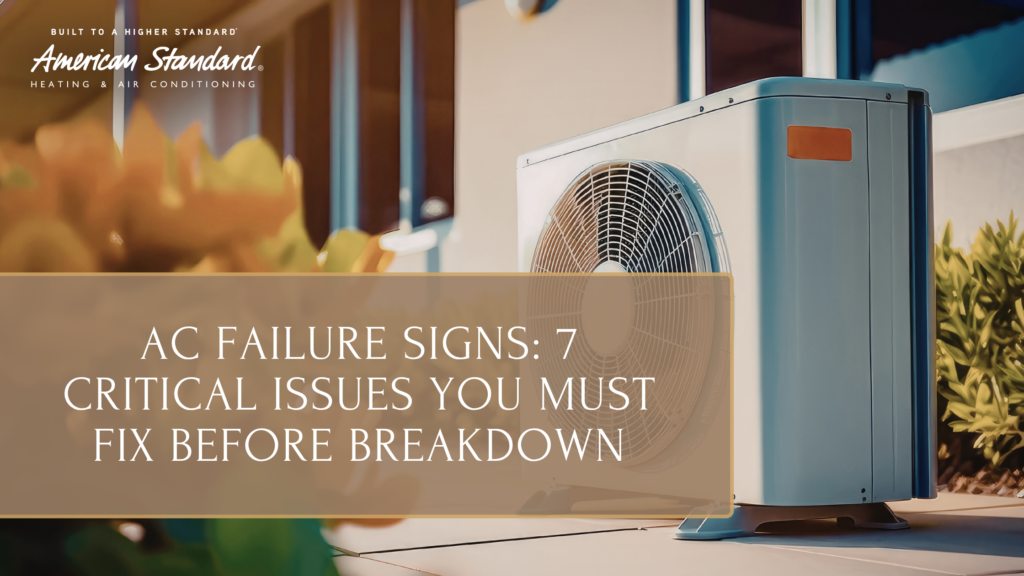
AC Failure Signs: 7 Critical Issues You Must Fix Before Breakdown
When summer heat is at its peak, the last thing any homeowner wants is a sudden air conditioning failure. Unfortunately, AC systems rarely break down without warning. In fact, there are several AC Failure Signs You Must Fix that appear early on—clear warning signals that something is wrong and, if ignored, can lead to expensive repairs or even total system replacement.
Understanding these early indicators can save you time, money, and stress. In this guide, we’ll walk through 7 critical signs to avoid costly repairs and system failure, helping you maintain a reliable, energy-efficient cooling system all season long.
Why Recognizing AC Failure Signs Matters
Your air conditioning system is one of the most important components of your home, especially during hot and humid Alabama summers. Ignoring small issues can quickly escalate into:
- Costly emergency repairs
- Complete system breakdowns
- Reduced energy efficiency
- Poor indoor air quality
- Increased utility bills
By identifying problems early, you can take proactive steps to protect your investment and ensure uninterrupted comfort.
1. Weak Airflow from Vents
What It Means
If you notice weak or reduced airflow, your AC system may be struggling to circulate cool air properly. This is often one of the earliest signs of trouble.
Possible Causes
- Clogged air filters
- Blocked or closed vents
- Failing blower motor
- Ductwork leaks or obstructions
How to Fix It
- Replace dirty air filters immediately
- Ensure vents are open and unobstructed
- Schedule a professional inspection for ductwork or motor issues
Strong airflow is essential for consistent cooling and energy efficiency.
2. Warm Air Instead of Cool Air
What It Means
When your AC blows warm or room-temperature air, it’s a sign that your system is no longer cooling effectively.
Possible Causes
- Low refrigerant levels
- Compressor malfunction
- Thermostat issues
- Dirty coils
How to Fix It
- Check thermostat settings first
- Replace filters if clogged
- Call a professional to inspect refrigerant and compressor components
Ignoring this issue can quickly lead to complete system failure.
3. Frequent Cycling On and Off
What It Means
Short cycling—when your AC turns on and off frequently—indicates inefficiency and potential system strain.
Possible Causes
- Oversized AC unit
- Thermostat malfunction
- Dirty condenser coils
- Electrical issues
How to Fix It
- Clean outdoor condenser unit
- Replace or recalibrate thermostat
- Schedule professional diagnostics for electrical problems
Short cycling increases wear and tear, reducing system lifespan.
4. Unusual Noises Coming from the Unit
What It Means
Your AC should operate quietly. Grinding, squealing, banging, or rattling noises are warning signs of mechanical failure.
Possible Causes
- Loose components
- Worn belts
- Motor issues
- Debris inside the unit
How to Fix It
- Turn off the system to prevent damage
- Tighten visible loose parts (if safe)
- Call an HVAC technician for inspection
Ignoring strange noises often leads to major repairs.
5. Rising Energy Bills Without Increased Usage
What It Means
If your utility bills are increasing but your usage hasn’t changed, your AC may be losing efficiency.
Possible Causes
- Dirty air filters
- Aging system components
- Refrigerant leaks
- Poor maintenance
How to Fix It
- Replace air filters regularly
- Schedule seasonal maintenance
- Consider upgrading to a more energy-efficient system
An inefficient system works harder, consuming more energy while delivering less comfort.
6. Excess Humidity Indoors
What It Means
Your AC system should regulate humidity as well as temperature. If your home feels sticky or damp, your system may be struggling.
Possible Causes
- Malfunctioning evaporator coils
- Improper system sizing
- Refrigerant issues
- Poor ventilation
How to Fix It
- Use a dehumidifier temporarily
- Schedule a professional inspection
- Ensure your AC system is properly sized for your home
Balanced humidity improves comfort and prevents mold growth.
7. Foul or Musty Odors from Vents
What It Means
Unpleasant odors coming from your vents can indicate mold, mildew, or burnt components within your HVAC system.
Possible Causes
- Mold in ductwork or coils
- Clogged drain lines
- Electrical issues
- Dirty filters
How to Fix It
- Replace air filters
- Clean and clear condensate drain lines
- Schedule professional duct cleaning or system inspection
- Clean air is essential for a healthy indoor environment.
Preventative Maintenance Tips to Avoid AC Failure
Preventing AC breakdowns is always more cost-effective than emergency repairs.
Key Maintenance Practices
- Replace air filters every 1–3 months
- Schedule annual HVAC inspections
- Keep outdoor units clean and clear
- Seal and inspect ductwork
- Monitor thermostat performance
Routine care ensures your system runs efficiently and lasts longer.
When to Repair vs. Replace Your AC System
Sometimes, repeated issues signal that replacement is a better investment than repairs.
Consider Replacement If:
- Your system is over 10–15 years old
- Repairs are frequent and costly
- Energy bills continue to rise
- Cooling performance is inconsistent
Upgrading to a modern, energy-efficient system can improve comfort and reduce long-term costs.
The Importance of Professional HVAC Service
While some minor fixes can be handled by homeowners, many AC issues require professional expertise.
Certified technicians can:
- Diagnose hidden problems
- Ensure safe refrigerant handling
- Repair electrical components
- Optimize system performance
Professional maintenance provides peace of mind and protects your investment.
Frequently Asked Questions (FAQs)
1. What is the most common reason an AC system fails?
Lack of maintenance—especially dirty filters and neglected components—is the leading cause of AC failure.
2. How often should I have my AC serviced?
At least once per year, ideally before the cooling season begins.
3. Can I fix AC problems myself?
Basic tasks like replacing filters are DIY-friendly. Complex issues like refrigerant leaks or electrical problems require professionals.
4. Why is my AC running but not cooling?
This could be due to low refrigerant, dirty coils, or a malfunctioning compressor.
5. How do I know if my AC is beyond repair?
Frequent breakdowns, high repair costs, and poor performance often indicate it’s time for replacement.
6. Does regular maintenance really extend AC lifespan?
Yes. Proper maintenance can extend system life by several years and improve efficiency.
7. Why is my AC making loud noises?
Noises often indicate loose or damaged components and should be addressed immediately.
8. Can poor airflow damage my AC system?
Yes. Restricted airflow forces the system to work harder, leading to overheating and potential failure.
9. What temperature should I set my thermostat in summer?
Around 78°F is recommended for balancing comfort and energy efficiency.
10. How can I prevent unexpected AC breakdowns?
Regular maintenance, filter replacement, and early problem detection are key.
Contact Us
Swinson Air Conditioning is your independently owned American Standard Heating and Air Conditioning Dealer, serving the Eastern Shore area. We are a locally owned and operated Customer Care Dealer and would love to become your HVAC contractor. Whether your AC is showing signs of failure or you want to prevent costly breakdowns, our team is here to help with expert diagnostics, repairs, and maintenance services. Feel free to contact us via email or give us a call at 251-255-6031 for all of your HVAC needs this season.