
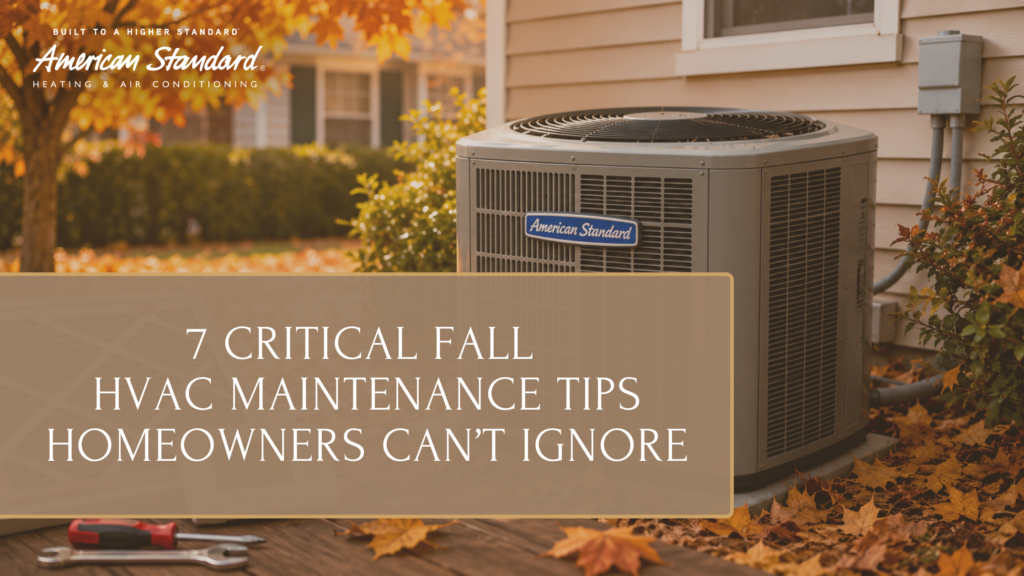
7 Critical Fall HVAC Maintenance Tips Homeowners Can’t Ignore
As summer fades and cooler fall temperatures arrive, your HVAC system is preparing for a major seasonal transition. After working hard to keep your home cool through the hottest months, your air conditioner deserves attention before your heating system takes center stage.
Fall is one of the best times to schedule HVAC maintenance because it gives homeowners an opportunity to identify worn components, airflow problems, and other issues before colder weather arrives. A small problem that seems insignificant in September can become a frustrating heating breakdown when you need your furnace or heat pump most.
For homeowners along the Eastern Shore, seasonal HVAC maintenance is especially important. Changes in temperature, humidity, and weather conditions can put additional demands on your comfort system. Taking a proactive approach can improve energy efficiency, support reliable heating, and help extend the life of your HVAC equipment.
Here are seven critical fall HVAC maintenance tips homeowners shouldn’t ignore.
Why Fall HVAC Maintenance Matters
Your HVAC system doesn’t stop working just because summer is over. Instead, fall represents a transition period when your cooling equipment may still be needed while your heating system needs to be ready for cooler mornings and evenings.
Scheduling maintenance during this transition can help uncover problems before they become emergencies.
A professional fall HVAC inspection can help identify:
- Dirty or clogged components
- Restricted airflow
- Electrical problems
- Worn belts and motors
- Thermostat issues
- Heating system problems
- Poor system efficiency
- Potential safety concerns
Preventive HVAC maintenance can also help you avoid the inconvenience of discovering a problem on the first genuinely cold night of the season.
1. Replace Your HVAC Air Filter
One of the easiest and most important fall HVAC maintenance tasks is replacing the air filter.
Your HVAC filter catches dust, dirt, pet hair, and other airborne particles before they enter the system. Over time, the filter becomes increasingly dirty and restrictive.
A clogged filter can reduce airflow and force your HVAC system to work harder to maintain your desired indoor temperature.
That can contribute to:
- Higher energy consumption
- Reduced heating and cooling performance
- Poor airflow
- Increased system strain
- Reduced indoor comfort
Before fall temperatures arrive, check your filter. If it looks dirty, replace it with the correct size and type recommended for your system.
How frequently you need to replace the filter depends on factors such as the filter type, household size, pets, indoor air quality, and system usage. Homes with pets or significant dust may require more frequent filter changes.
Don’t overlook this inexpensive maintenance step. A clean filter is an important part of maintaining proper HVAC airflow and efficiency.
2. Schedule Professional HVAC Maintenance
Changing your filter is something homeowners can generally handle themselves, but it doesn’t replace professional HVAC maintenance.
A trained technician can inspect components that aren’t easily accessible or safe for homeowners to service.
During a seasonal HVAC maintenance visit, a professional may inspect and evaluate:
- Electrical connections
- Blower components
- Heating and cooling controls
- Thermostat operation
- Airflow
- System performance
- Condensate components
- Safety controls
- Outdoor equipment
- Other system-specific components
Professional maintenance can reveal developing problems before they cause a complete breakdown.
For example, a worn electrical component may still allow your system to operate today but fail when the equipment is under heavy demand. Identifying that problem early can help prevent an inconvenient emergency service call.
Fall HVAC maintenance also provides an opportunity to make sure your heating system is ready before temperatures drop significantly.
3. Check Your Thermostat Before Temperatures Drop
Your thermostat controls when your HVAC system operates, so it should be part of your fall preparation.
If you’ve been using cooling settings throughout summer, it’s a good idea to review your thermostat before switching to heating.
Check that:
- The thermostat displays the correct temperature.
- Heating mode works properly.
- The programmed schedule is appropriate.
- Batteries are replaced if your thermostat requires them.
- The system responds properly when the temperature setting changes.
If your thermostat is outdated or difficult to program, fall may also be a good time to consider an upgrade.
A programmable or smart thermostat can provide greater control over your home’s heating and cooling schedule. Proper scheduling can help prevent unnecessary HVAC operation while maintaining a comfortable indoor environment.
However, thermostat problems aren’t always obvious. If your thermostat calls for heating but your system doesn’t respond correctly, professional HVAC service can help determine whether the problem involves the thermostat, wiring, controls, or HVAC equipment itself.
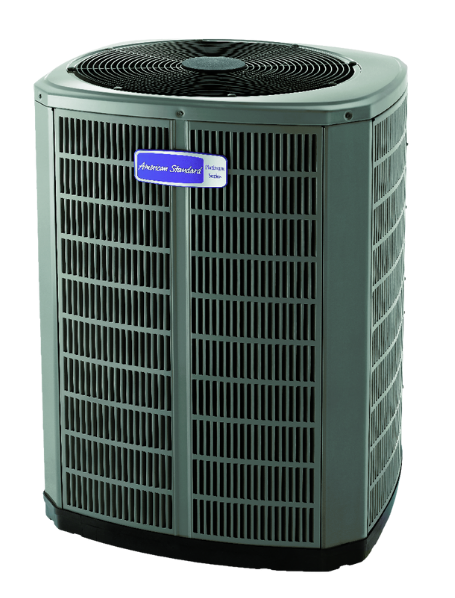
4. Inspect Your Outdoor HVAC Unit
Even though fall means cooler temperatures, your outdoor HVAC equipment still needs attention.
Outdoor units can collect leaves, grass clippings, dirt, and other debris. Vegetation can also grow around the equipment during the warmer months.
Restricted clearance around an outdoor unit can interfere with proper operation and airflow.
Before fall gets underway, look around your outdoor equipment and make sure the area is free from excessive debris and vegetation.
Avoid damaging the equipment while cleaning around it. If the unit requires more extensive cleaning or appears damaged, have an HVAC professional inspect it.
Also pay attention to unusual sounds, visible damage, or changes in system performance.
If something doesn’t look or sound right, don’t wait until winter to investigate it.
5. Check Your Vents and Airflow
Proper airflow is essential for HVAC performance.
If furniture, rugs, curtains, or other objects are blocking supply vents, conditioned air may not circulate properly through your home.
Walk through each room and check that your vents and registers are:
- Open
- Clean
- Unblocked
- Free from furniture or other obstructions
Poor airflow can contribute to rooms that feel too warm or too cold. It can also cause your HVAC system to run longer as it attempts to reach the thermostat’s set temperature.
If you notice weak airflow even when vents are open and unobstructed, the problem may be deeper within the HVAC system or ductwork.
Potential causes can include dirty components, duct leaks, blower problems, or other airflow restrictions.
Don’t simply close vents in rooms you don’t use. Your HVAC system is designed to operate with a particular airflow balance, and closing multiple vents can interfere with proper system performance.
6. Look for Signs Your Heating System Needs Attention
Fall is the perfect time to pay attention to warning signs that your heating system may need service.
You don’t want to discover a heating problem during the first cold snap.
Some warning signs include:
- Unusual noises
- Strange odors
- Weak airflow
- Uneven heating
- Frequent cycling
- Increasing energy bills
- Thermostat problems
- Difficulty maintaining the desired temperature
Some HVAC problems develop gradually. Your system may continue running while becoming increasingly inefficient or unreliable.
That’s why homeowners shouldn’t ignore changes in performance.
For example, if your heating system makes a new rattling, grinding, squealing, or banging sound, don’t assume it’s normal simply because the equipment still produces heat.
Likewise, if some rooms are significantly colder than others, there may be an airflow, ductwork, insulation, or equipment issue that needs attention.
Addressing warning signs early can help reduce the possibility of a larger repair later.
7. Don’t Ignore Your Ductwork
Your HVAC system can be operating properly while your ductwork wastes conditioned air.
Ducts distribute heated and cooled air throughout your home. If ductwork has leaks, gaps, disconnected sections, or inadequate insulation, your HVAC system may have difficulty delivering conditioned air where it’s needed.
Potential signs of ductwork problems include:
- Weak airflow from certain vents
- Uneven temperatures
- Excessive dust
- Rooms that never seem comfortable
- HVAC systems running for long periods
- Higher-than-expected energy bills
Some ductwork is located in attics, crawl spaces, or other difficult-to-access areas. Because of this, homeowners may not notice problems until they become significant.
A professional HVAC technician can evaluate accessible ductwork and determine whether additional inspection, sealing, insulation, or repair is appropriate.
Properly functioning ductwork helps your HVAC system deliver conditioned air more efficiently and consistently.
Don’t Wait Until the First Cold Snap
One of the biggest HVAC mistakes homeowners make is waiting until they need heat to discover whether the system works properly.
When temperatures suddenly fall, HVAC companies can become much busier with heating repair calls. A system that has been neglected all summer may choose the worst possible time to develop a problem.
Taking care of maintenance in fall gives you an opportunity to identify potential issues while temperatures are still relatively comfortable.
Instead of waiting for a breakdown, consider scheduling your seasonal HVAC service before you need your heating system every day.
How Fall HVAC Maintenance Can Save Money
Regular maintenance isn’t simply about preventing breakdowns. It can also help your HVAC system operate more efficiently.
When equipment is dirty, airflow is restricted, components are worn, or controls aren’t functioning correctly, your system may have to operate longer to maintain the desired temperature.
Longer operating cycles can contribute to increased energy consumption.
A properly maintained system can provide more consistent performance and may help reduce unnecessary strain on components.
Although maintenance cannot guarantee that an HVAC system will never require repairs, it is an important part of responsible system ownership.
It can also help homeowners become aware of aging equipment before a complete failure occurs, giving them more time to consider repair or replacement options.
Fall Is Also a Good Time to Think About HVAC Replacement
If your HVAC system is older, unreliable, or repeatedly requiring repairs, fall may be a good time to discuss your options with an HVAC professional.
Replacing a system before an emergency occurs gives you more time to evaluate available equipment and determine what makes sense for your home.
Homeowners may want to consider replacement when they experience:
- Frequent breakdowns
- Increasing repair costs
- Declining efficiency
- Inconsistent comfort
- Difficulty finding replacement parts
- An aging HVAC system
A professional can evaluate your existing equipment and explain whether continued repairs or replacement is the better long-term option.
You don’t necessarily need to replace an HVAC system simply because it is old. The right decision depends on the equipment’s condition, efficiency, repair history, comfort performance, and your household’s needs.
Don’t Forget About Indoor Comfort
Fall maintenance isn’t only about heating.
Indoor comfort depends on your entire HVAC system working together. Airflow, humidity, filtration, temperature control, ductwork, and equipment performance all contribute to how comfortable your home feels.
Along the Eastern Shore, humidity can remain a concern even as outdoor temperatures begin to cool. A properly operating HVAC system helps manage both temperature and indoor moisture.
If your home feels unusually humid, stuffy, or uncomfortable, mention those concerns during your HVAC service appointment.
A technician can help determine whether the problem is related to HVAC performance or whether another issue may be contributing to the discomfort.
Why Local HVAC Service Makes a Difference
Your home’s HVAC system operates in the specific climate and conditions of your area. Local HVAC professionals understand the seasonal demands placed on heating and cooling equipment throughout the Eastern Shore.
Whether you need routine HVAC maintenance, heating service, air conditioning repair, thermostat assistance, or help evaluating an aging system, working with an experienced HVAC contractor can provide peace of mind.
Fall is the ideal time to get ahead of problems instead of reacting to them after a breakdown occurs.
Frequently Asked Questions About Fall HVAC Maintenance
1. When should I schedule fall HVAC maintenance?
Early fall is an excellent time to schedule HVAC maintenance because it allows a technician to inspect your system before colder weather arrives. Scheduling early can also help you address problems before you rely heavily on your heating system.
2. How often should HVAC systems receive maintenance?
Many homeowners benefit from professional HVAC maintenance at least once a year. Some systems and households may benefit from more frequent service. Your HVAC professional can recommend a maintenance schedule based on your equipment and usage.
3. Should I replace my air filter before fall?
Yes. Checking and replacing a dirty HVAC filter is an important part of seasonal preparation. A clean filter helps support proper airflow and efficient system operation.
4. Why is my HVAC system running but my home still feels uncomfortable?
Several issues can cause inconsistent comfort, including restricted airflow, thermostat problems, ductwork issues, inadequate system performance, or equipment problems. A professional inspection can help identify the underlying cause.
5. What are the warning signs that my heating system needs repair?
Unusual noises, strange odors, weak airflow, uneven heating, frequent cycling, rising energy bills, and difficulty maintaining the desired temperature can all indicate a heating problem.
6. Can HVAC maintenance lower my energy bills?
Regular maintenance can help your HVAC system operate efficiently by identifying issues that may cause unnecessary strain or extended run times. However, energy costs also depend on weather, home insulation, thermostat settings, equipment efficiency, and other factors.
7. Is fall a good time to replace an old HVAC system?
Fall can be a convenient time to evaluate an aging or unreliable HVAC system before winter demand increases. A professional can help determine whether repair or replacement makes more sense based on your system’s condition.
8. How can I improve HVAC airflow?
Start by replacing a dirty filter, keeping vents open and unobstructed, and making sure furniture isn’t blocking registers. If airflow remains weak, have a professional inspect the system and ductwork.
9. Should I close vents in rooms I don’t use?
Generally, homeowners shouldn’t close multiple vents in an attempt to save energy. Doing so can affect airflow balance and system performance. If you need better room-by-room temperature control, ask an HVAC professional about appropriate solutions.
10. Why is professional HVAC maintenance important?
Professional maintenance allows trained technicians to inspect components that homeowners cannot safely or effectively evaluate themselves. Regular service can help identify developing problems, support efficient operation, and prepare the system for seasonal demands.
Contact Us
Swinson Air Conditioning is your independently owned American Standard Heating and Air Conditioning Dealer, serving the Eastern Shore area. We are a locally owned and operated Customer Care Dealer and would love to become your HVAC contractor. If you’re preparing your HVAC system for fall, need seasonal maintenance, or have noticed heating or cooling problems in your home, feel free to contact us via email or give us a call at 251-964-9009 for all of your HVAC needs this season.