
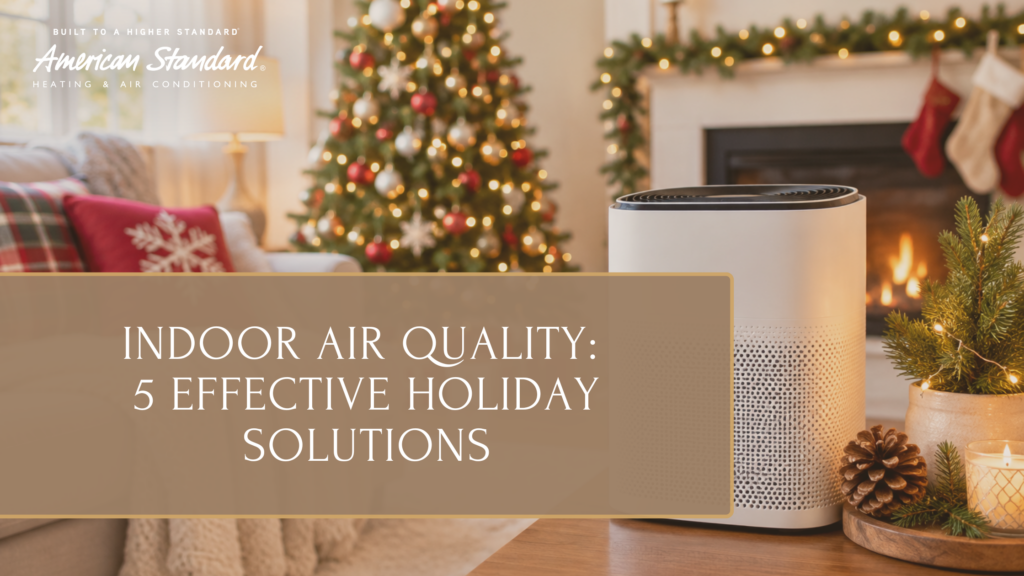
Indoor Air Quality: 5 Effective Holiday Solutions
The holiday season brings family gatherings, overnight guests, festive decorations, holiday cooking, and more time spent indoors. While these traditions make your home feel warm and welcoming, they can also affect your indoor air quality.
Dust, pet dander, cooking particles, household odors, and excess humidity can accumulate when more people are spending time inside. Closed windows and doors can also reduce natural air circulation, while your HVAC system works to maintain a comfortable indoor temperature.
Fortunately, homeowners have several ways to improve the indoor environment before the holiday season gets busy. From better air filtration to humidity control and professional HVAC maintenance, a few practical solutions can help create a cleaner, more comfortable home.
Here are five effective indoor air quality solutions to consider before your next holiday gathering.
Why Indoor Air Quality Matters During the Holidays
Indoor air quality describes the condition of the air inside your home. It can be influenced by airborne particles, humidity, odors, ventilation, household activities, and pollutants that enter or develop indoors.
The holidays can create additional indoor air quality challenges because homes often experience increased activity.
Your home may have:
- More family members and guests indoors
- Increased cooking and baking
- More frequent use of candles and fragrances
- Holiday decorations that have been stored for months
- Additional dust and airborne particles
- Pets spending more time inside
- Windows and doors remaining closed
- Increased HVAC system use
These activities don’t automatically create poor indoor air quality, but they can change the indoor environment.
If your home already struggles with dust, humidity, odors, or inadequate ventilation, the effects may become more noticeable during the holidays.
Improving indoor air quality can help make your home more comfortable while supporting a cleaner indoor environment for your family and guests.
1. Upgrade Your HVAC Air Filtration
One of the simplest ways to support better indoor air quality is to maintain an effective HVAC filtration system.
Your HVAC filter captures airborne particles as air passes through the system. Depending on the filter, it may help capture dust, pollen, pet dander, and other airborne debris.
However, filters can become dirty over time.
A clogged filter can restrict airflow and make your HVAC system work harder to circulate conditioned air throughout your home.
This can affect both indoor air quality and HVAC efficiency.
How often should you replace your HVAC filter?
There isn’t one replacement schedule that works for every household. The appropriate frequency depends on several factors, including:
- Filter type
- Household size
- Number of pets
- Indoor dust levels
- HVAC usage
- Number of occupants
- Manufacturer recommendations
Check your filter regularly. If it appears dirty or clogged, replace it with the correct filter recommended for your HVAC system.
Consider whole-home air filtration
If you’re looking for a more comprehensive approach, ask an HVAC professional about whole-home air filtration.
A portable air cleaner typically treats air in a specific room. A whole-home filtration solution works with your HVAC system to address airborne particles throughout the home.
This can be especially helpful during the holidays when your home may have more people, activity, and airborne particles than usual.
A professional can evaluate your existing HVAC system and help determine what type of filtration is appropriate for your home.
2. Consider an Air Purification System
Air filtration and air purification are related but aren’t necessarily the same thing.
A traditional HVAC filter is designed primarily to capture particles as air moves through the filter. Depending on the technology, an air purification system can provide an additional approach to managing certain airborne contaminants.
For homeowners who want to improve their home’s indoor air quality, an air purification system may be worth considering.
You may want to discuss air purification with an HVAC professional if you’re concerned about:
- Excessive household dust
- Pet dander
- Seasonal allergens
- Persistent indoor odors
- Airborne particles
- Overall indoor air cleanliness
The right solution depends on your home’s size, HVAC equipment, existing filtration, and specific indoor air quality concerns.
Why consider air purification before the holidays?
Holiday gatherings often mean more people spending time inside your home. More activity can increase airborne particles and odors.
Installing or evaluating an air purification solution before your holiday guests arrive gives you time to make sure your HVAC and indoor air quality systems are operating properly.
An HVAC professional can assess your current setup and explain which options may be appropriate for your home.
3. Manage Indoor Humidity
Humidity is another important part of indoor comfort.
A home that is too humid can feel warmer and less comfortable, while excessive moisture can contribute to an environment where musty odors and moisture-related problems become more noticeable.
On the other hand, excessively dry indoor air can also create discomfort.
Maintaining balanced indoor humidity can help create a more comfortable home throughout the holiday season.
For homeowners along the Eastern Shore, humidity can remain a consideration even as outdoor temperatures become cooler. Your air conditioner naturally removes moisture while cooling, but additional humidity control may sometimes be appropriate.
Signs your home may have excessive humidity
Watch for:
- A damp or sticky feeling
- Condensation on windows
- Persistent musty odors
- Difficulty maintaining comfortable temperatures
- Visible moisture
- Rooms that consistently feel humid
If your home feels excessively humid even when your HVAC system is running, talk with an HVAC professional about your options.
Consider whole-home dehumidification
A whole-home dehumidifier may provide additional humidity control depending on your home’s needs and HVAC setup.
Unlike a small portable dehumidifier that treats a limited area, a whole-home system can be integrated into your HVAC system to provide more comprehensive humidity management.
Your HVAC professional can determine whether a whole-home dehumidification solution is appropriate for your home.
4. Improve Ventilation and Air Circulation
Proper ventilation and air circulation are important parts of maintaining a comfortable indoor environment.
Modern homes are often designed to be energy efficient and tightly sealed. While this can reduce unwanted outdoor air infiltration, it can also limit natural air exchange.
There are several simple ways homeowners can support better air circulation during the holidays.
Use kitchen exhaust fans
Holiday cooking can generate steam, smoke, grease, and other airborne particles.
Use your kitchen exhaust fan while cooking, particularly when using the stovetop.
Run bathroom exhaust fans
Showers and baths introduce moisture into the air. Running the bathroom exhaust fan during and after a shower can help remove excess moisture.
Keep HVAC vents clear
Make sure furniture, rugs, curtains, decorations, and other objects aren’t blocking supply or return vents.
Use ceiling fans
Ceiling fans can help circulate air and improve comfort. Remember that fan direction should be adjusted appropriately for the season and your home’s needs.
Ask about professional ventilation solutions
If your home consistently feels stuffy despite normal HVAC operation, there may be a ventilation issue worth investigating.
An HVAC professional can evaluate your home’s airflow and discuss whether additional ventilation equipment or another solution may be appropriate.
5. Schedule Professional HVAC and Indoor Air Quality Maintenance
One of the most effective ways to support better indoor air quality is to keep your HVAC system properly maintained.
Your HVAC system does much more than heat and cool your home. It also circulates indoor air, moves air through filters, and can play an important role in managing humidity.
Professional HVAC maintenance can help identify potential issues involving:
- Airflow
- Filters
- Blower components
- Ductwork
- Humidity
- Thermostat operation
- HVAC performance
- Indoor air quality equipment
Routine maintenance can also help identify developing HVAC problems before they interfere with your holiday plans.
Why schedule HVAC maintenance before the holidays?
The holiday season often means your home is busier than usual.
You may have:
- Family visiting
- Overnight guests
- More cooking
- More frequent HVAC use
- Additional decorations
- Pets spending more time indoors
The last thing you want during a family gathering is an HVAC problem that leaves your home uncomfortable.
Scheduling maintenance before the busiest part of the holiday season gives you an opportunity to address potential concerns before they become urgent.
Holiday Activities That Can Affect Indoor Air Quality
Improving indoor air quality starts with understanding what can affect it.
Cooking and Baking
Holiday meals can generate smoke, grease, steam, and airborne particles.
Use kitchen exhaust fans when cooking and keep them running for a period afterward to help remove moisture and cooking-related particles.
If possible, avoid allowing excessive cooking odors and particles to spread throughout the house.
Candles and Fragrances
Candles, incense, and fragranced products can contribute to indoor particles and odors.
If you use candles as part of your holiday decorations, use them responsibly and make sure your home has appropriate ventilation.
Holiday Decorations
Decorations stored in attics, garages, closets, or storage containers can collect dust.
When bringing decorations out, consider cleaning them before placing them around your home.
You may also want to clean surfaces after decorating to reduce accumulated dust.
Guests and Increased Activity
More people inside the home naturally means more activity and movement. This can stir up settled dust and introduce additional particles.
Regular cleaning, appropriate filtration, and good airflow can help keep your indoor environment comfortable.
Pets
Holiday visitors and activity can cause pets to spend more time indoors. Pets can contribute dander and other airborne particles.
Regular grooming and cleaning, combined with proper HVAC filtration, can help manage pet-related particles.
Simple Indoor Air Quality Tips for Holiday Gatherings
In addition to the five major solutions above, several simple habits can support better indoor air quality throughout the season.
Change your HVAC filter
Don’t wait until a filter is visibly clogged. Check it regularly and follow the manufacturer’s recommendations for replacement.
Keep return vents unobstructed
Your HVAC system needs to pull indoor air back into the system. Don’t place furniture or decorations directly over return vents.
Clean regularly
Dust surfaces, vacuum floors, and clean areas where dust tends to accumulate.
Control moisture
Use exhaust fans when cooking and showering, and address persistent humidity concerns with professional HVAC assistance.
Don’t ignore unusual odors
Persistent musty, burning, or unusual odors should be investigated rather than simply covered with air fresheners.
Schedule HVAC maintenance
A professional inspection can help identify airflow, filtration, equipment, and humidity concerns that may not be obvious to homeowners.
How Indoor Air Quality and HVAC Efficiency Work Together
Indoor air quality and HVAC efficiency are closely connected.
For example, a clogged filter can restrict airflow. When airflow is restricted, your HVAC system may have to work harder to circulate conditioned air.
Similarly, ductwork problems can affect both comfort and efficiency by allowing conditioned air to escape before reaching the rooms where it’s needed.
Poor humidity control can also make your home feel uncomfortable even when the thermostat shows the desired temperature.
That’s why indoor air quality shouldn’t be viewed as completely separate from your HVAC system.
Your filter, ductwork, thermostat, airflow, humidity control, and HVAC equipment all contribute to the overall indoor environment.
When Should You Call an HVAC Professional?
Some indoor air quality improvements are simple enough for homeowners to handle themselves.
Replacing an air filter, cleaning dusty surfaces, keeping vents clear, and using exhaust fans are good examples.
However, professional assistance is recommended when you need to evaluate or install HVAC equipment or address persistent problems.
Consider contacting an HVAC professional if you experience:
- Persistent humidity
- Weak airflow
- Unusual HVAC odors
- Excessive dust
- Frequent HVAC cycling
- Poor temperature control
- Ongoing indoor comfort problems
- Concerns about filtration or air purification
A professional can evaluate your HVAC system and help identify the solutions that make sense for your home’s specific needs.
Why Eastern Shore Homeowners Should Pay Attention to Indoor Air Quality
The Eastern Shore’s coastal environment can present unique comfort challenges throughout the year.
Humidity can remain a concern even when temperatures change, while homeowners may rely heavily on HVAC equipment to maintain comfortable indoor conditions.
During the holidays, increased occupancy and indoor activity can add another layer of demand.
Taking time to evaluate your home’s indoor air quality before the holiday season can help you create a more comfortable environment for your family and guests.
Frequently Asked Questions About Indoor Air Quality
1. What is indoor air quality?
Indoor air quality refers to the condition of the air inside a home or building. It can be affected by airborne particles, humidity, odors, ventilation, household activities, and other indoor or outdoor sources.
2. How can I improve indoor air quality in my home?
Start with basic steps such as replacing dirty HVAC filters, keeping vents clear, cleaning regularly, controlling humidity, and using exhaust fans while cooking and showering. For more comprehensive improvements, consider professional HVAC filtration, purification, ventilation, or humidity control solutions.
3. How often should I replace my HVAC air filter?
The appropriate schedule depends on your filter type, HVAC system, household, pets, and indoor conditions. Check your filter regularly and follow the recommendations from your HVAC equipment and filter manufacturer.
4. Is an air purifier the same as an HVAC filter?
No. HVAC filters are designed primarily to capture particles as air moves through the system. Air purification technologies can provide additional approaches to managing certain airborne contaminants. An HVAC professional can help determine what combination is appropriate for your home.
5. Why does my house feel humid during the holidays?
Increased occupancy, cooking, showers, and other household activities can introduce additional moisture. HVAC performance can also affect humidity control. If your home consistently feels humid, an HVAC professional can evaluate the situation and discuss possible solutions.
6. Can HVAC maintenance improve indoor air quality?
Proper HVAC maintenance can support indoor air quality by helping maintain appropriate airflow, filtration, and equipment performance. It can also help identify ductwork, humidity, and other issues that may affect your indoor environment.
7. Should I install a whole-home air purification system?
The right solution depends on your home’s size, HVAC equipment, existing filtration, and indoor air quality concerns. An HVAC professional can evaluate your current system and explain available options.
8. How does humidity affect indoor comfort?
Excess humidity can make your home feel warmer and more uncomfortable. Managing indoor humidity can help improve comfort and create a more balanced indoor environment.
9. Can holiday decorations affect indoor air quality?
They can contribute to dust if they’ve been stored for long periods. Cleaning decorations before placing them around your home can help reduce accumulated dust.
10. When should I schedule indoor air quality service?
You can schedule an evaluation whenever you have concerns about dust, odors, humidity, airflow, filtration, or general indoor comfort. Before the holiday season is a convenient time to make sure your HVAC and indoor air quality systems are ready for increased household activity.
Contact Us
Swinson Air Conditioning is your independently owned American Standard Heating and Air Conditioning Dealer, serving the Eastern Shore area. We are a locally owned and operated Customer Care Dealer and would love to become your HVAC contractor. If you’re interested in improving your home’s indoor air quality, upgrading filtration, managing humidity, or preparing your HVAC system for the holiday season, feel free to contact us via email or give us a call at 251-964-9009 for all of your HVAC needs this season.