
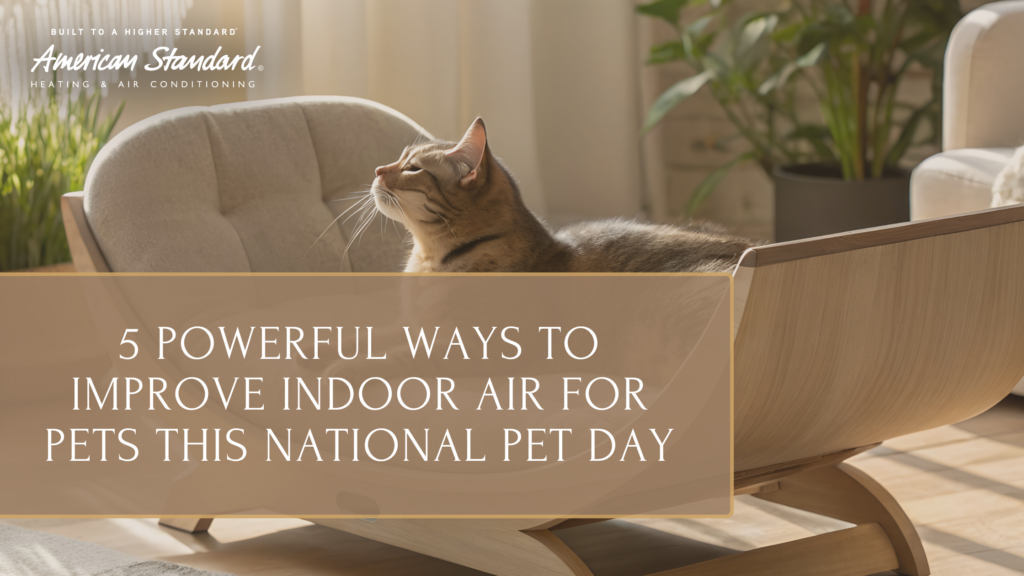
5 Powerful Ways to Improve Indoor Air for Pets This National Pet Day
National Pet Day is the perfect reminder to celebrate your furry friends and ensure their health and happiness. While we often think about toys, treats, and cuddles, one critical aspect of pet care is indoor air quality (IAQ). Pets can shed fur, dander, and bring in allergens from outside, which can affect both their well-being and yours.
In this guide, we’ll explore five powerful ways to improve indoor air quality for pets, keeping your home comfortable, safe, and allergy-friendly. Whether you have cats, dogs, or small animals, these strategies will make a significant difference this National Pet Day and beyond.
1. Upgrade Your Air Filters for Better Filtration
Why It Matters
Pets shed fur and dander, which can accumulate in your home and trigger allergies or respiratory issues. Standard air filters may not capture all these particles, reducing air quality.
Tips
- Use high-efficiency HVAC filters rated MERV 11–13.
- Replace or clean filters every 1–3 months, more often if you have multiple pets.
- Consider HEPA filters for standalone air purifiers to trap fine allergens.
Proper filtration improves breathing comfort for both humans and pets, and reduces airborne allergens in your home.
2. Keep Your HVAC System Clean and Maintained
Why It Matters
Dust, pet hair, and debris can accumulate in your ducts and HVAC system, circulating allergens and odors throughout your home.
Tips
- Schedule professional HVAC maintenance annually or biannually.
- Ask your technician to clean coils, vents, and ducts as part of IAQ improvement.
- Check and replace air filters regularly to prevent clogs.
A clean HVAC system ensures your home stays fresh and healthy for pets, especially during National Pet Day celebrations.
3. Use Air Purifiers and Ventilation Strategically
Why It Matters
Even with clean ducts and filters, indoor air can become stale or full of allergens, especially in rooms where pets spend most of their time.
Tips
- Place HEPA air purifiers in pet-heavy areas such as living rooms or bedrooms.
- Open windows periodically to allow fresh air circulation, weather permitting.
- Use exhaust fans in kitchens and bathrooms to remove extra moisture and odors.
Air purifiers and proper ventilation reduce pet dander, pollen, and odor, improving comfort for everyone.
4. Maintain Clean Floors and Surfaces
Why It Matters
Pets can track in dirt, pollen, and other allergens that accumulate on floors, furniture, and bedding. These particles can re-enter the air and worsen IAQ.
Tips
- Vacuum frequently with a HEPA-filter vacuum.
- Wash pet bedding weekly in hot water to remove dander and germs.
- Mop hard floors regularly with a pet-safe cleaner.
- Brush pets regularly to reduce loose hair and dander indoors.
Consistent cleaning ensures allergy triggers and odor are minimized, keeping your home welcoming for pets and family alike.
5. Control Humidity and Mold
Why It Matters
Excess moisture can promote mold growth, which is harmful to pets and humans alike. Indoor humidity levels that are too low can also dry out skin and respiratory passages for both you and your pets.
Tips
- Maintain indoor humidity between 30–50% using a humidifier or dehumidifier as needed.
- Fix leaks promptly to prevent mold and mildew buildup.
- Ensure proper ventilation in bathrooms, kitchens, and laundry areas.
Proper humidity control creates a healthier breathing environment, especially for pets sensitive to dry or damp air.
Bonus Tips for a Pet-Friendly IAQ Environment
- Choose non-toxic cleaning products to avoid irritating your pets’ respiratory system.
- Keep litter boxes clean and ventilated to reduce ammonia odors.
- Minimize smoke exposure, candles, or strong fragrances in pet areas.
- Rotate or groom pets outdoors when possible to prevent indoor hair accumulation.
With these strategies, your home will be healthier and more comfortable for both pets and humans year-round.
Frequently Asked Questions
1. Can pets really affect indoor air quality?
Yes. Pets shed hair, dander, and bring in allergens from outside, all of which can circulate in your home’s air if not properly managed.
2. What’s the best type of air filter for pet owners?
High-efficiency MERV 11–13 filters or HEPA filters capture pet dander, dust, and other fine particles effectively.
3. How often should I clean my HVAC system if I have pets?
Annual professional maintenance is recommended, with filter checks every 1–3 months and additional duct cleaning if you have multiple pets.
4. Can air purifiers replace HVAC filters?
No. Air purifiers supplement HVAC filters by providing additional purification, especially in high-pet areas, but they don’t replace routine HVAC maintenance.
5. How do I reduce pet odors without harming indoor air quality?
Regular cleaning, ventilation, and air purifiers work best. Avoid strong chemicals, scented candles, or sprays that can irritate pets.
Contact Us
Swinson Air Conditioning is your independently owned American Standard Heating and Air Conditioning Dealer, proudly serving the Eastern Shore area. We are a locally owned and operated Customer Care Dealer and would love to become your trusted HVAC contractor.
Feel free to contact us via email or give us a call at 251‑964‑9009 for all of your indoor air quality solutions, HVAC maintenance, and pet-friendly home comfort needs this National Pet Day.